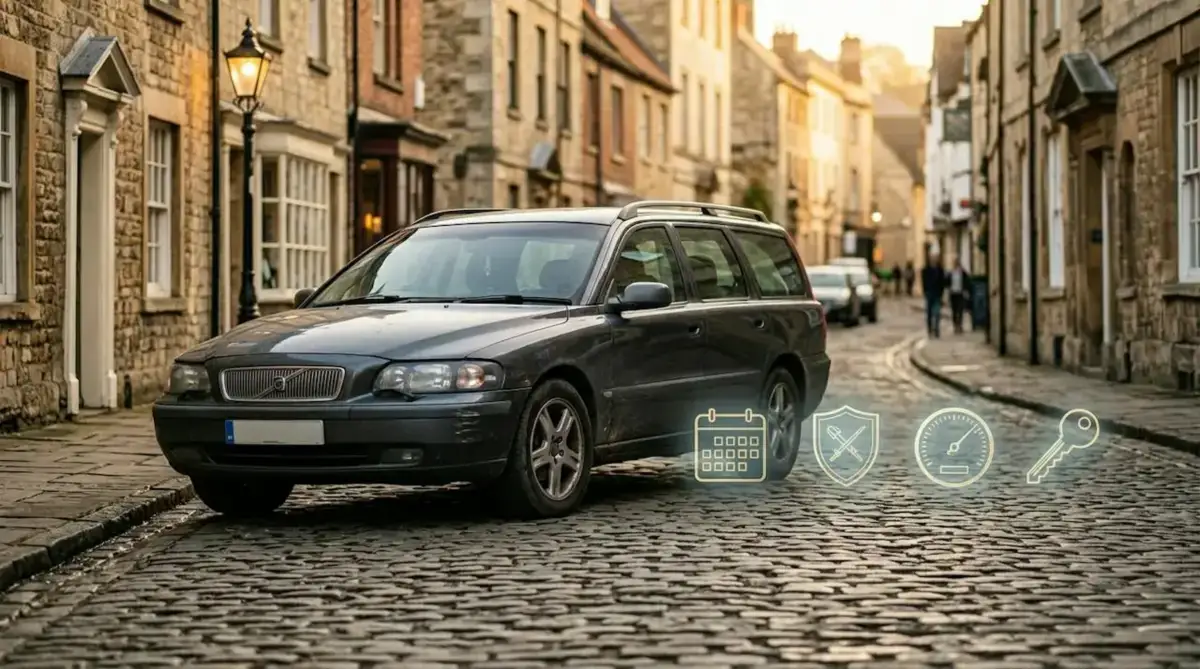
Every used car has a story. Some have had one careful owner and a stamp in the service book every year. Others have been stolen, crashed, clocked or used as security for a loan. A vehicle history check is how you find out which story you’re buying into.
This guide covers everything: what a vehicle history check is, what it shows, the difference between free and paid checks, and exactly what to do with the results.
What is a vehicle history check?
A vehicle history check is a report on a car’s recorded past. You enter the registration number, and the check searches databases held by organisations such as the DVLA, the police, finance companies and insurers. In the UK, people often call it an “HPI check”, after one of the earliest providers.
What does a vehicle history check show?
A comprehensive check covers:
| Section | What it reveals |
|---|---|
| Vehicle identity | Make, model, colour, engine, fuel type, year and VIN details |
| Outstanding finance | Whether a lender still has an agreement recorded on the car |
| Stolen status | Whether the police have recorded the car as stolen |
| Write-off history | Whether an insurer has written it off and in which category |
| Mileage history | Recorded odometer readings that can reveal clocking |
| Plate changes | Previous registrations linked to the car |
| Keeper history | How many registered keepers it has had |
| MOT and tax | Current status and expiry dates |
| Valuation | An estimate of market value (on some checks) |
Free vs paid vehicle history checks
A free check uses publicly available data. It’s excellent for confirming that a car matches its advert and has a valid MOT and tax. Read more in our guide to free HPI checks.
A paid check adds the private data: finance, stolen and write-off records, plus mileage and plate history. That’s where the expensive surprises hide. If you want to understand every section of a paid report, see what a full HPI check covers.
Why a vehicle history check matters
Most car problems you can see. You can spot a dent, hear a noisy exhaust or feel a slipping clutch on a test drive. But some of the most costly problems are completely invisible:
- Finance owed: nothing on the car tells you a lender is still owed money.
- Stolen: a cloned or stolen car can have convincing plates and paperwork.
- Write-off: a professional repair can make a Cat S car look brand new.
- Clocking: a digital odometer can be altered without leaving a trace.
A history check is the only practical way to uncover these before you pay.
How to do a vehicle history check
- Get the registration. It’s usually in the advert or visible in the photos.
- Run a free check. Make sure the make, model, colour and engine match the advert.
- Check the MOT history. Look at advisories and the mileage trend. Our MOT history guide shows you how.
- Unlock a full check before you travel to view, or at least before paying a deposit.
- Verify on the day. Match the VIN on the car and the V5C logbook with the report, and re-check if time has passed.
How to read the results
Everything clear
Great news, but not a guarantee of condition. Read our explainer on what HPI clear means to understand its limits.
Outstanding finance
Don’t hand over money until the seller has settled the finance and you have written confirmation from the lender. See buying a car with finance owing.
Stolen
Walk away. Don’t confront the seller. Consider reporting it to the police.
Write-off
A Cat S or Cat N car can be fine if repaired properly and priced fairly. Get an independent inspection and check with your insurer first.
Mileage discrepancy
Ask the seller to explain. Genuine reasons exist, such as a replaced instrument cluster, but there should be paperwork to prove it.
Start free on CheckHPI for vehicle, MOT and tax details. Unlock the full vehicle history check with finance, stolen and write-off records from £9.99.
The bottom line
A vehicle history check is quick, cheap and the best protection you have against the most expensive used car problems. Do it before you pay anything, read every section, and combine it with a proper inspection and test drive. Your future self will thank you.
Frequently asked questions
What is a vehicle history check?
A vehicle history check is a report on a car's recorded past. It searches databases for outstanding finance, stolen records, insurance write-offs, mileage history, plate changes and more.
Is a vehicle history check the same as an HPI check?
In everyday use, yes. "HPI check" is a common name for any full vehicle history check in the UK.
How do I check a car's history for free?
You can check basic details, MOT history and tax status for free using the car's registration. Finance, stolen and write-off data requires a paid check.
What information do I need for a vehicle history check?
Just the car's registration number. When you see the car, compare the VIN in the report with the VIN on the car and the V5C logbook.
Can a vehicle history check tell me about accidents?
It shows accidents that led to an insurance write-off. Minor accidents that weren't claimed on insurance won't appear.