You’ve spotted a bargain online, and there it is in the small print: “Cat S”. Or maybe “Cat N”. Is it a hidden gem or a disaster waiting to happen? Let’s break down exactly what the write-off categories mean, so you can decide with confidence.
What does “written off” actually mean?
When a car is damaged in an accident, flood, fire or theft, the insurer weighs up the repair bill against what the car’s worth. If repairing it doesn’t make sense, either financially or because the damage is too severe, the insurer pays the owner out and the car is classed as a write-off.
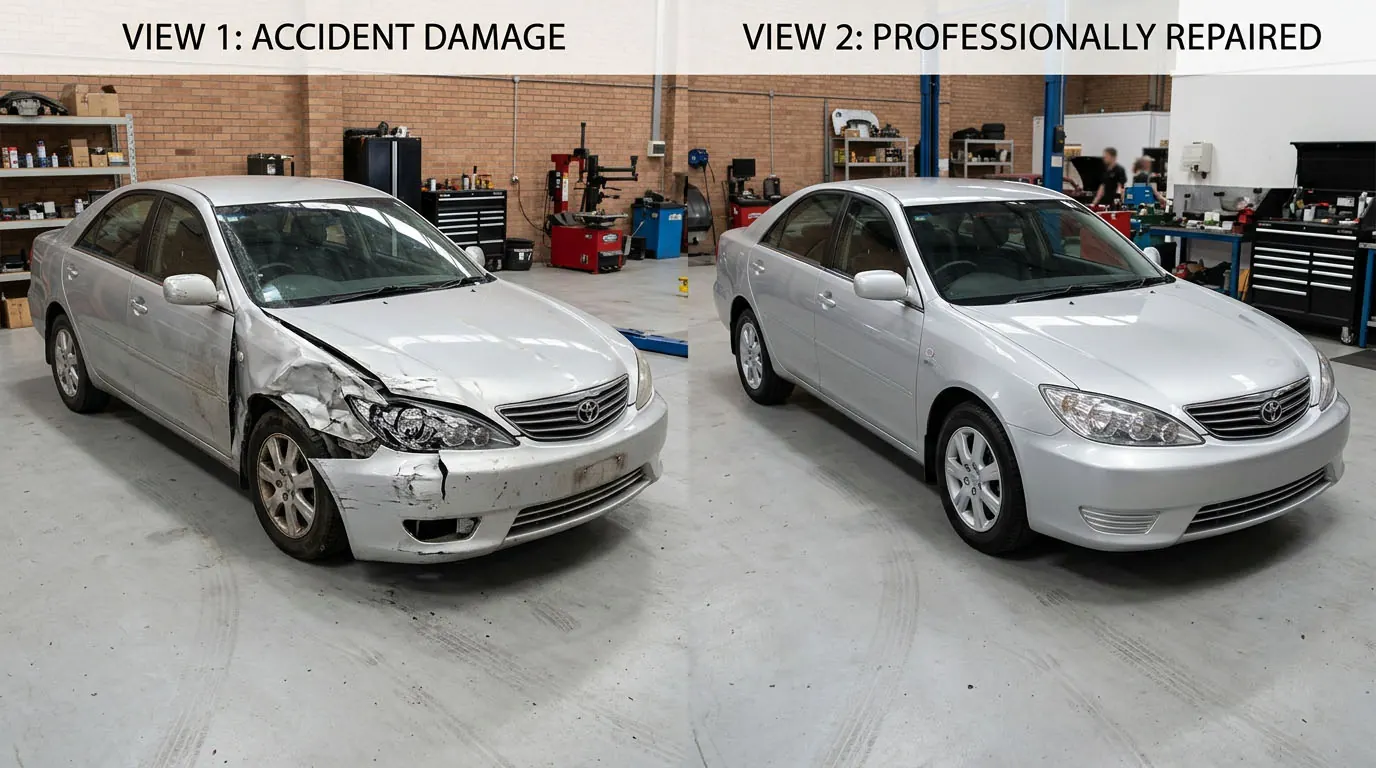
It’s worth knowing that a write-off isn’t always about how badly the car’s damaged. An older car with modest damage can be written off simply because it isn’t worth much. That’s why some write-offs come back to the road in great shape.
The four categories: A, B, S and N
Insurers follow an industry code of practice to place written-off cars into one of four categories:
Cat A: Scrap
The most serious category. The car is so badly damaged it must be crushed completely. No parts can be salvaged or reused. A Cat A car should never be back on the road.
Cat B: Break
The body shell must be crushed, but some parts can be salvaged and used on other vehicles. Like Cat A, a Cat B car must never return to the road.
Cat S: Structural damage
The car’s structure has been damaged. That might be the chassis, the crumple zones, or other parts that keep you safe in a crash. A Cat S car can be repaired and driven again, but those structural repairs need to be done properly.
Cat N: Non-structural damage
The damage didn’t affect the car’s structure. It might be cosmetic, like dents and scrapes, or electrical, like a damaged dashboard. Cat N cars can be repaired and driven again, and are generally seen as the lower-risk option.
| Category | Damage | Can it go back on the road? |
|---|---|---|
| Cat A | Severe, whole car scrapped | No |
| Cat B | Severe, shell crushed, parts salvaged | No |
| Cat S | Structural | Yes, after proper repair |
| Cat N | Non-structural | Yes, after repair |
What happened to Cat C and Cat D?
If you’re browsing older adverts, you might still see Cat C and Cat D. These were the old categories, replaced in October 2017. The old system was based mainly on the cost of repairs. The new one focuses on the type of damage, which is much more useful for buyers.
Roughly speaking, Cat C and D cars could have either structural or non-structural damage, so if you see one, it’s worth digging a bit deeper into what actually happened.
Should you buy a Cat S or Cat N car?
It can be a smart way to get more car for your money. But go in with your eyes open. Here are the pros and cons:
The upsides:
- They usually sell for noticeably less than the same car with a clean history
- Lots are repaired to a high standard and drive perfectly
- Cat N damage can be purely cosmetic
The downsides:
- Some insurers charge more to cover write-offs, and a few won’t cover them at all
- The marker stays for life, so you’ll get less when you sell
- A poor repair, particularly on a Cat S, can affect safety
- There’s no official inspection required before a repaired write-off goes back on the road, so the quality of the repair is down to whoever did it
How to buy a written-off car safely
- Run an HPI check so you know the category and date of the write-off. Never rely on the seller’s word alone.
- Ask what happened. What was the damage? Who repaired it?
- Ask for proof of repairs. Invoices, photos of the damage and a list of parts are all good signs.
- Get an independent inspection, especially for Cat S. A specialist can check the repairs and the alignment.
- Get an insurance quote first, and tell the insurer it’s a write-off. You must declare it.
- Negotiate the price. It should reflect the write-off status.
The real risk isn’t buying a Cat S or Cat N, it’s buying one without knowing. A seller who skips over it, or a price that looks like a clean car’s, is exactly why an HPI check matters.
The bottom line
A write-off marker isn’t automatically a reason to walk away. Cat N and well-repaired Cat S cars can be great value. The key is knowing about it upfront, paying the right price and making sure the repair was done properly. An HPI check gives you that first, most important piece of the puzzle.