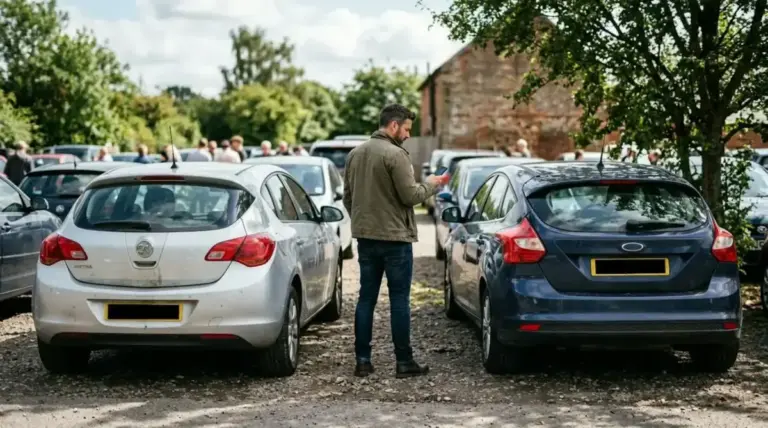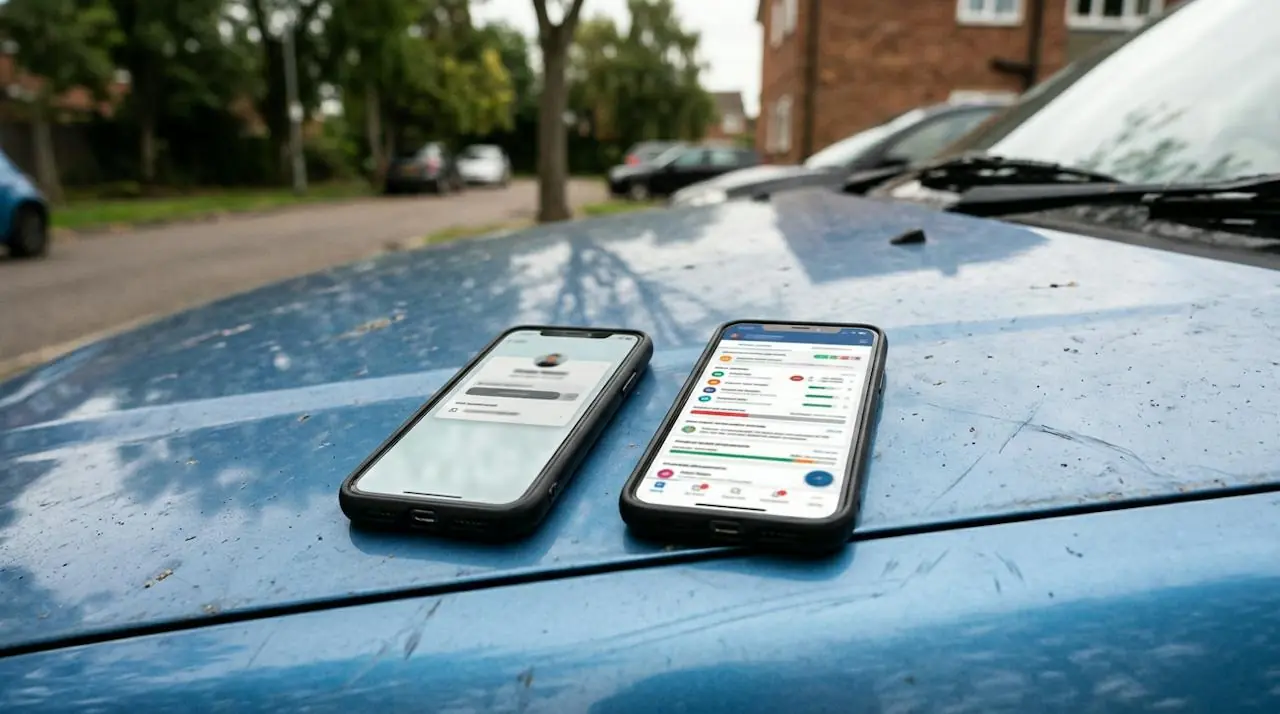
Car check websites usually offer two types of check: a basic one (often free) and a full HPI check. The names sound similar, so it’s easy to assume they’re much the same. They’re not.
Here’s a clear, side-by-side comparison, so you know which one you need and when.
What is a basic car check?
A basic car check, sometimes called a free car check or vehicle lookup, uses publicly available data. It confirms the car’s identity and legal status: what it is, how old it is, and whether it has a valid MOT and tax.
Our guide to the free car check by registration lists everything you can find out this way.
What is a full HPI check?
A full HPI check adds private data from the police, finance companies and insurers. It reveals the hidden, expensive problems that a basic check can’t see. For every section explained, read full HPI check: everything it covers.
Side-by-side comparison
| What’s checked | Basic check | Full HPI check |
|---|---|---|
| Make, model and colour | Yes | Yes |
| Engine size and fuel type | Yes | Yes |
| Year and first registration | Yes | Yes |
| MOT and tax status | Yes | Yes |
| Outstanding finance | No | Yes |
| Police stolen records | No | Yes |
| Insurance write-off categories | No | Yes |
| Mileage history and clocking flags | Limited (MOT readings only) | Yes, on most full checks |
| Plate change history | No | Yes, on most full checks |
| Number of keepers | No | Yes, on most full checks |
| Typical cost | Free | Around £10 to £20 |
When a basic check is enough
- Browsing adverts and narrowing down a shortlist
- Checking a car matches its advert before arranging a viewing
- Checking your own car’s MOT or tax due dates
- Getting a feel for a car’s maintenance through its MOT history
When you need a full HPI check
- Before paying any money, including a deposit
- Buying privately, where you have less legal protection
- Buying online or at auction, especially if you won’t see the car first
- When the price seems too good for the car’s age and mileage
- When the seller is vague about the car’s history or paperwork
A real-world example
Imagine two identical cars, both priced at £7,500. A basic check on each shows the right make, model and colour, a valid MOT and current tax. They look the same.
A full check tells a different story. Car A is clear. Car B has a Cat S write-off and finance still outstanding. Same advert, same basic check, completely different risk. That’s the difference a full check makes.
Which full check tier should you choose?
| What's included | Standard £9.99 | Premium £14.99 | Ultimate £19.99 |
|---|---|---|---|
| Make, model, colour, year and engine | ✓ Included | ✓ Included | ✓ Included |
| MOT and tax status | ✓ Included | ✓ Included | ✓ Included |
| Outstanding finance | ✓ Included | ✓ Included | ✓ Included |
| Stolen vehicle check | ✓ Included | ✓ Included | ✓ Included |
| Insurance write-off (Cat A, B, S, N) | ✓ Included | ✓ Included | ✓ Included |
| Mileage history and clocking flags | – Not included | ✓ Included | ✓ Included |
| Plate change history | – Not included | ✓ Included | ✓ Included |
| Number of previous keepers | – Not included | ✓ Included | ✓ Included |
| Market valuation | – Not included | – Not included | ✓ Included |
| Fair offer guide and repair budget | – Not included | – Not included | ✓ Included |
| Vehicle image | – Not included | – Not included | ✓ Included |
| ULEZ, running costs and depreciation | – Not included | – Not included | ✓ Included |
| Safety recalls, Euro NCAP and towing limits | – Not included | – Not included | ✓ Included |
| Logbook (V5C) date check | – Not included | – Not included | ✓ Included |
| Free re-check within 30 days | – Not included | – Not included | ✓ Included |
| MOT and tax reminders | – Not included | – Not included | ✓ Included |
| £30k data guarantee | – Not included | – Not included | ✓ Included |
For most buyers, Standard covers the essentials. Premium adds mileage, plates and keepers, which is ideal for private sales. Ultimate adds a valuation, a vehicle image and a data guarantee for bigger purchases.
Run a free check on CheckHPI to confirm the basics, then unlock the full HPI check from £9.99 when you’ve found the one.
The bottom line
A basic car check tells you what a car is. A full HPI check tells you what it’s been through. Use the basic check to browse and shortlist, then run a full check before you pay. It’s the simplest way to avoid the most expensive used car mistakes.
Frequently asked questions
What's the difference between a basic car check and a full HPI check?
A basic check confirms the car's identity, MOT and tax using public data. A full HPI check adds outstanding finance, stolen records, write-off categories, mileage history, plate changes and keeper history.
Is a basic car check free?
Usually, yes. Basic checks use publicly available data, so most providers offer them free of charge.
Do I need a full HPI check if I'm buying from a dealer?
Dealers should check their stock and you have extra legal protection, but your own check is cheap, independent peace of mind and gives you a record of what you knew when you bought.
Can a basic check spot a clocked car?
Partly. If it includes MOT history, you can compare mileage readings. A full check with a mileage history section gives you more data points and flags discrepancies.